01 ·
Registration
Registration opened on 11 April 2026, and 35 teams representing different universities registered. The 16 teams that answered the registration questions successfully went through to the consultation round.
Flagship initiativeADA Law SocietyFirst edition · 2026
ADA Law Society’s own moot court competition on international law — its first edition argued on the law of the sea, from registration in April to the final at ADA University on 25 July 2026.
The Caspian International Law Moot Court was founded in 2026 on the initiative of the Society’s 2025–2026 Board, as its first moot court competition focused on international law. The idea had taken shape some seven years earlier, and the concept, aims and organisation of the competition were developed steadily from then on.
Until then Azerbaijan had no moot court competition specialised in international law. The Society set out to fill that gap — not only to hold a new competition, but to give legal education in the country a new direction and students a different academic platform.
It is meant as a lasting tradition rather than a single event: to be held every year, to widen its field of teams and judges, to draw in international universities and legal professionals, and to become one of the region’s leading international moot court competitions.
The case put current and complex questions of the law of the sea before the teams: the effect of tides on the determination of maritime boundaries, the legal status of archipelagos, and the rights and obligations that status creates for states.
At its centre, Arstotzka strikes the submarine T-572 belonging to Kaltan, and Kaltan in response searches a vessel belonging to Arstotzka. The two states bring their dispute before the International Tribunal for the Law of the Sea (ITLOS), and teams argued for both sides under UNCLOS, customary international law and the case law of international courts and tribunals.
International Tribunal for the Law of the Sea (ITLOS)
01 ·
Registration opened on 11 April 2026, and 35 teams representing different universities registered. The 16 teams that answered the registration questions successfully went through to the consultation round.
02 ·
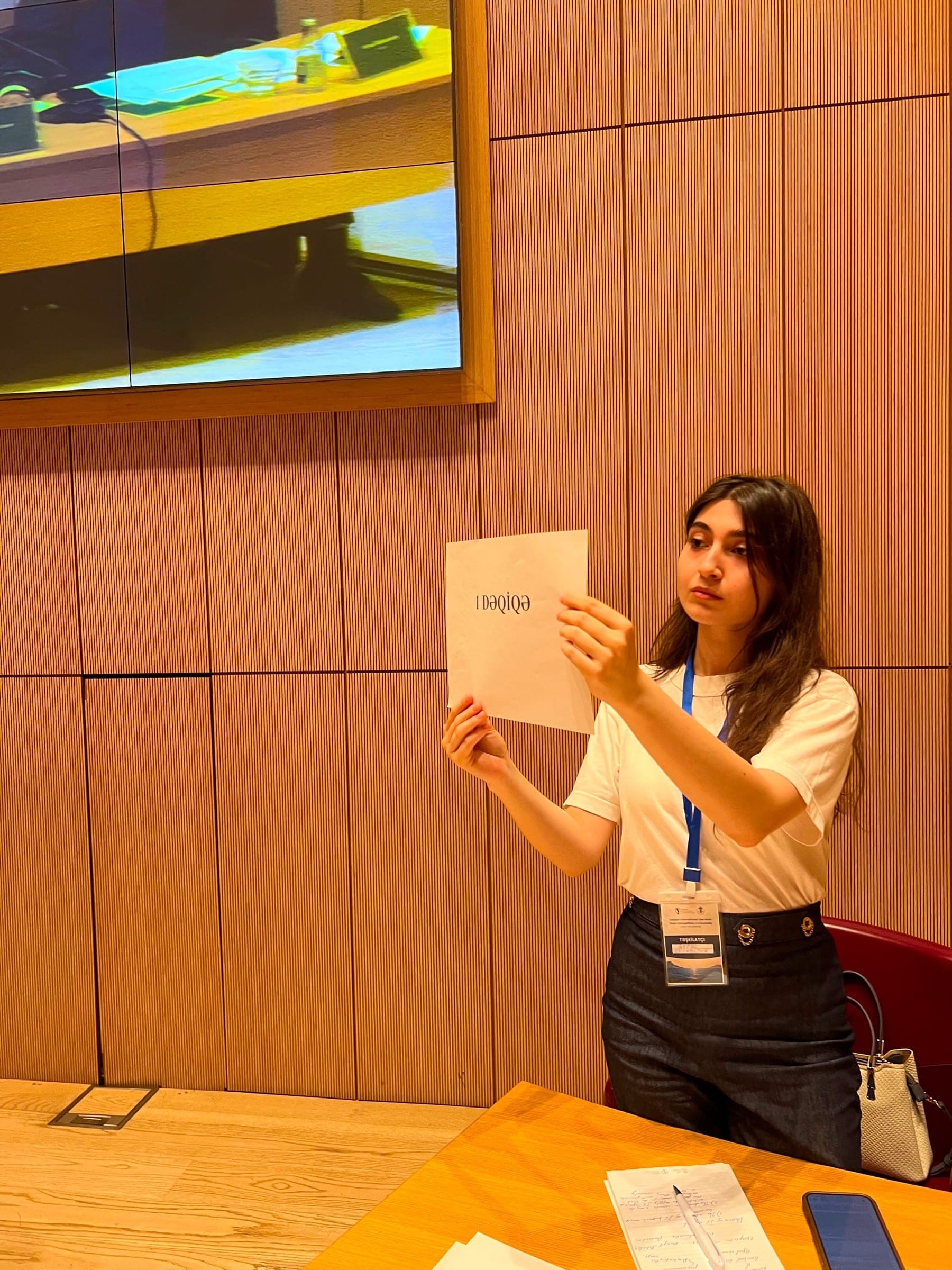
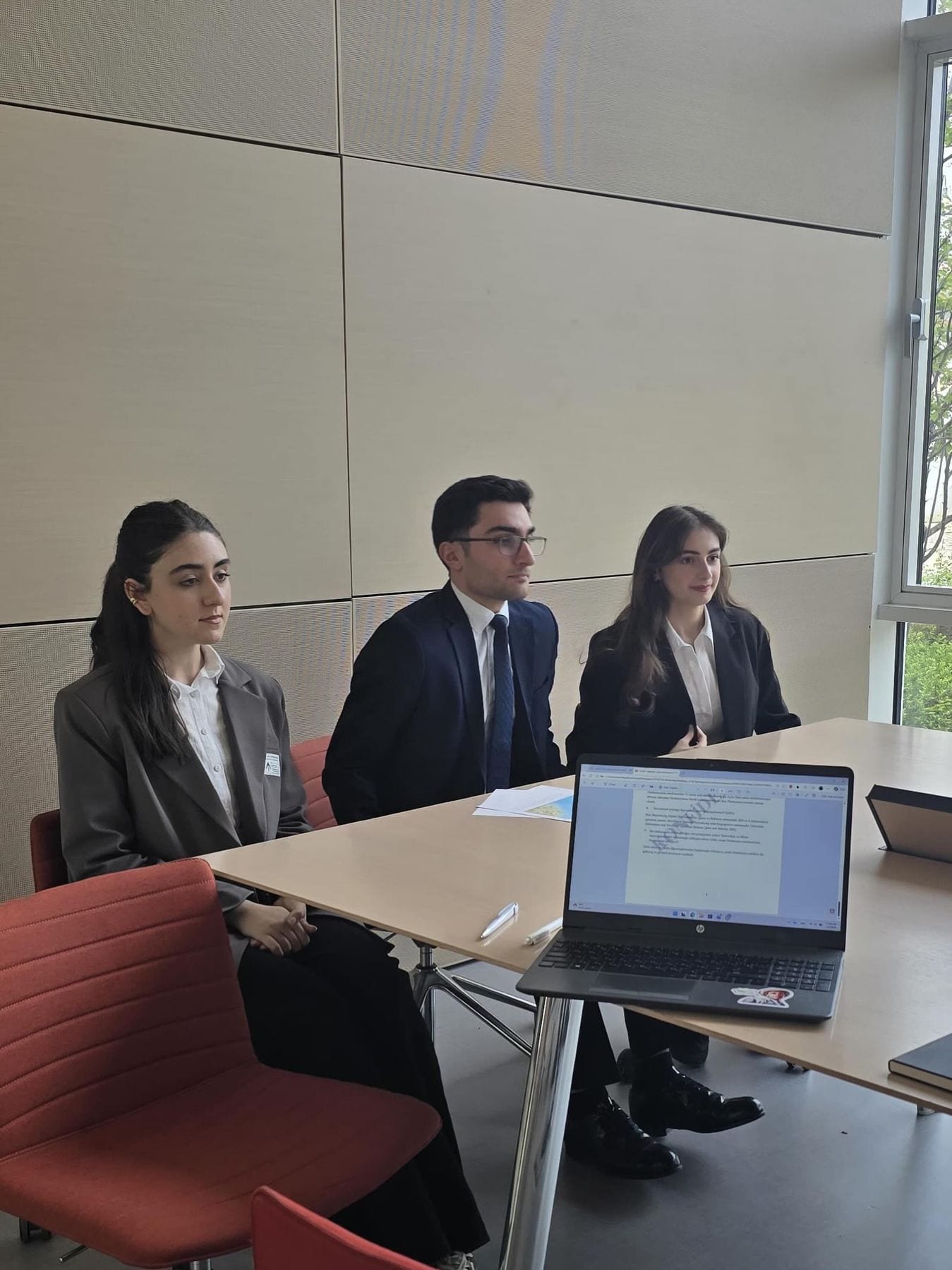
A new stage devised by ADA Law Society, held before the traditional written and oral rounds at ADA University. Teams met the facts of a consultation case in the meeting itself and, within at most 25 minutes, answered the questions of an organising-committee member playing the client and proposed legal solutions, before two judges. Twelve teams went through.
03 ·
After the case was announced, İnci Məmmədli led an online training on the law of the sea — its main principles, its international legal framework and the issues raised by the case — and shared her materials with the teams.
04
Each team submitted memoranda for both the applicant and the respondent. Every memorandum was marked out of 110 by a panel of three judges, and the average of their marks became its score. Eight teams qualified for the oral rounds.
05 ·
Held at ADA University. Teams argued both sides before benches of three judges, and their oral scores were averaged with their written scores. Teams 104, 109, 110 and 112 went through to the semifinals.
06 ·
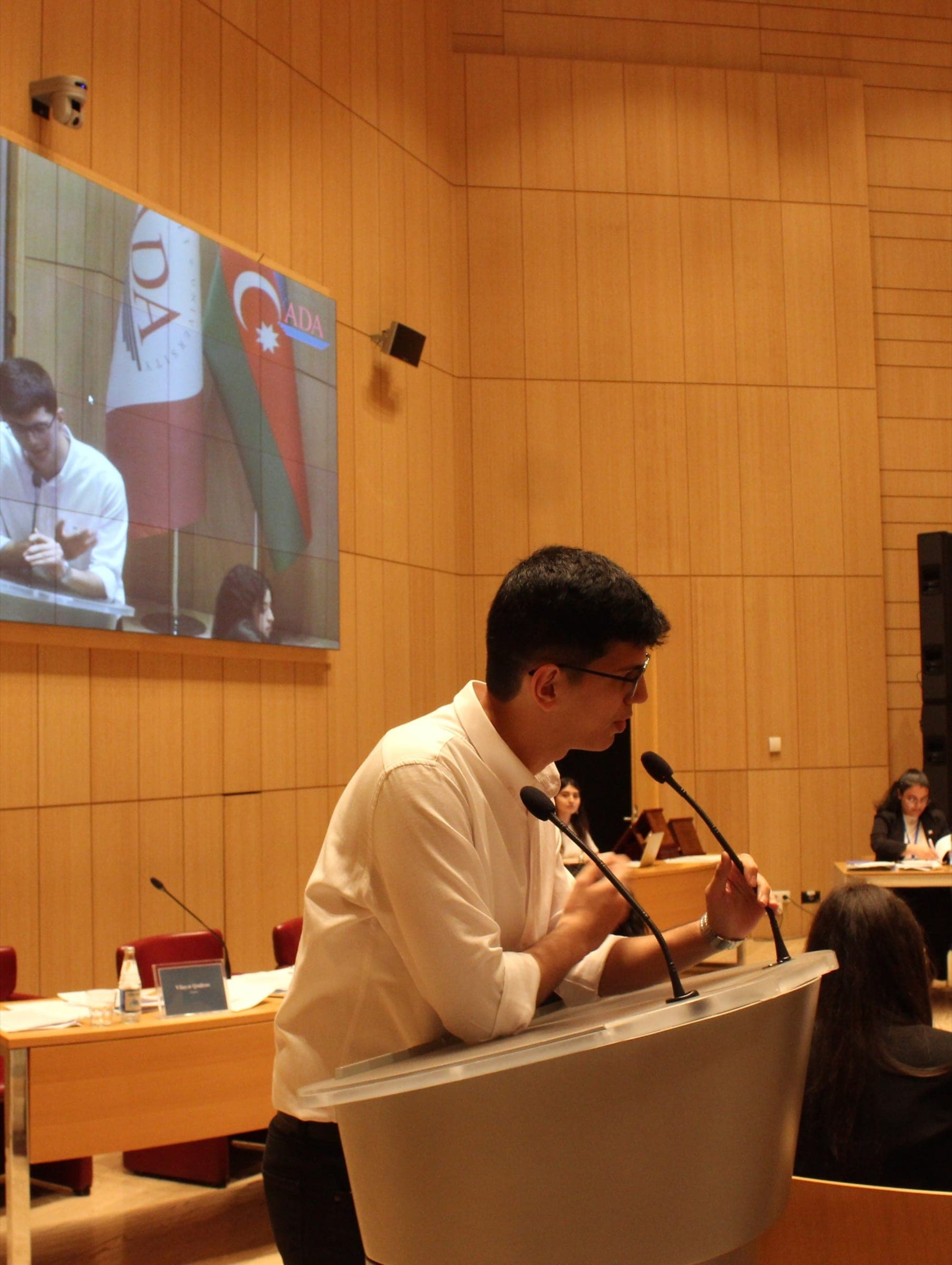
Held at ADA University. Each team argued a single side, drawn by lot, before three judges. The two highest-scoring teams — 104 of the National Aviation Academy and 109 of ADA University — reached the final.
07 ·
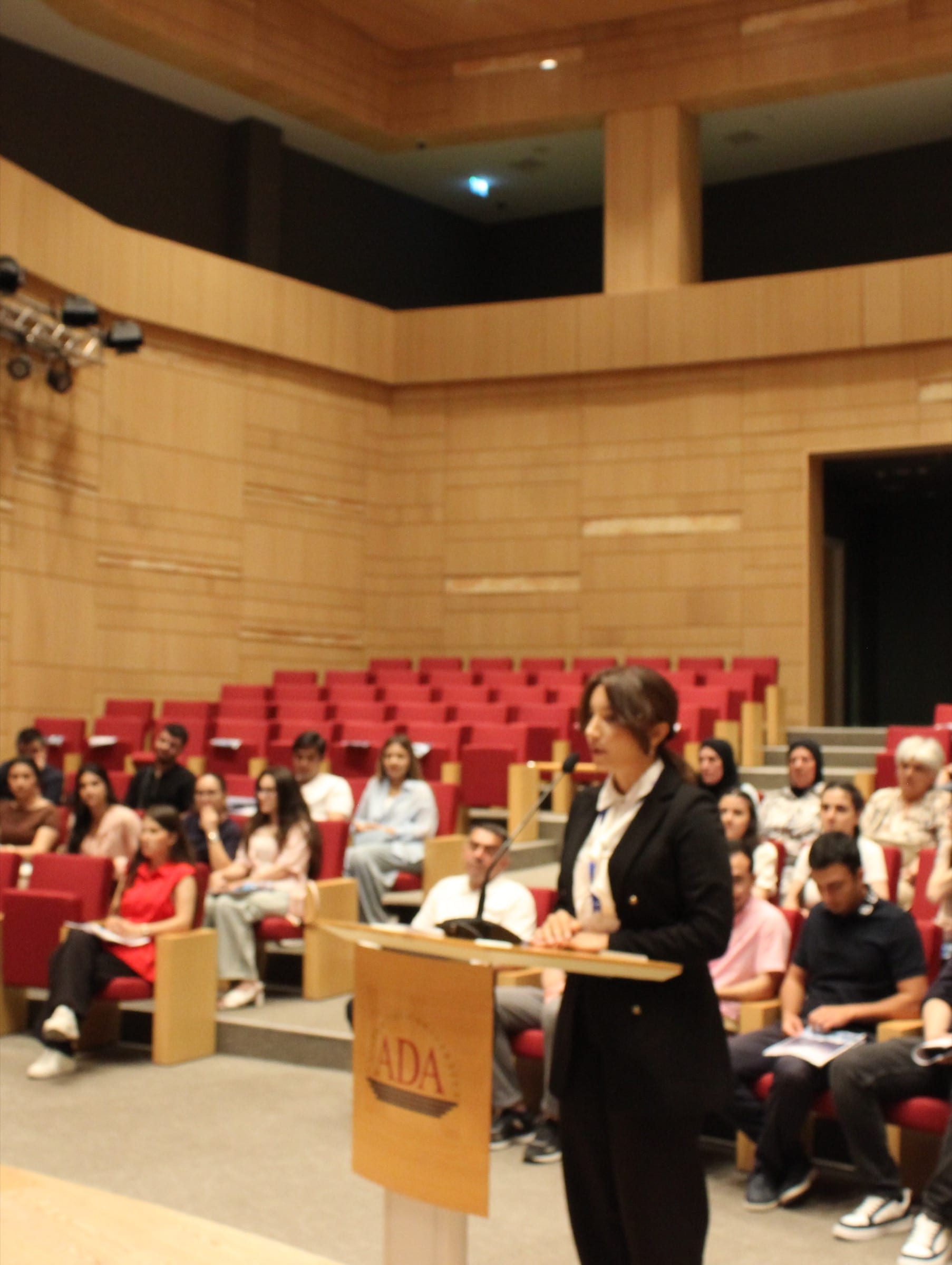
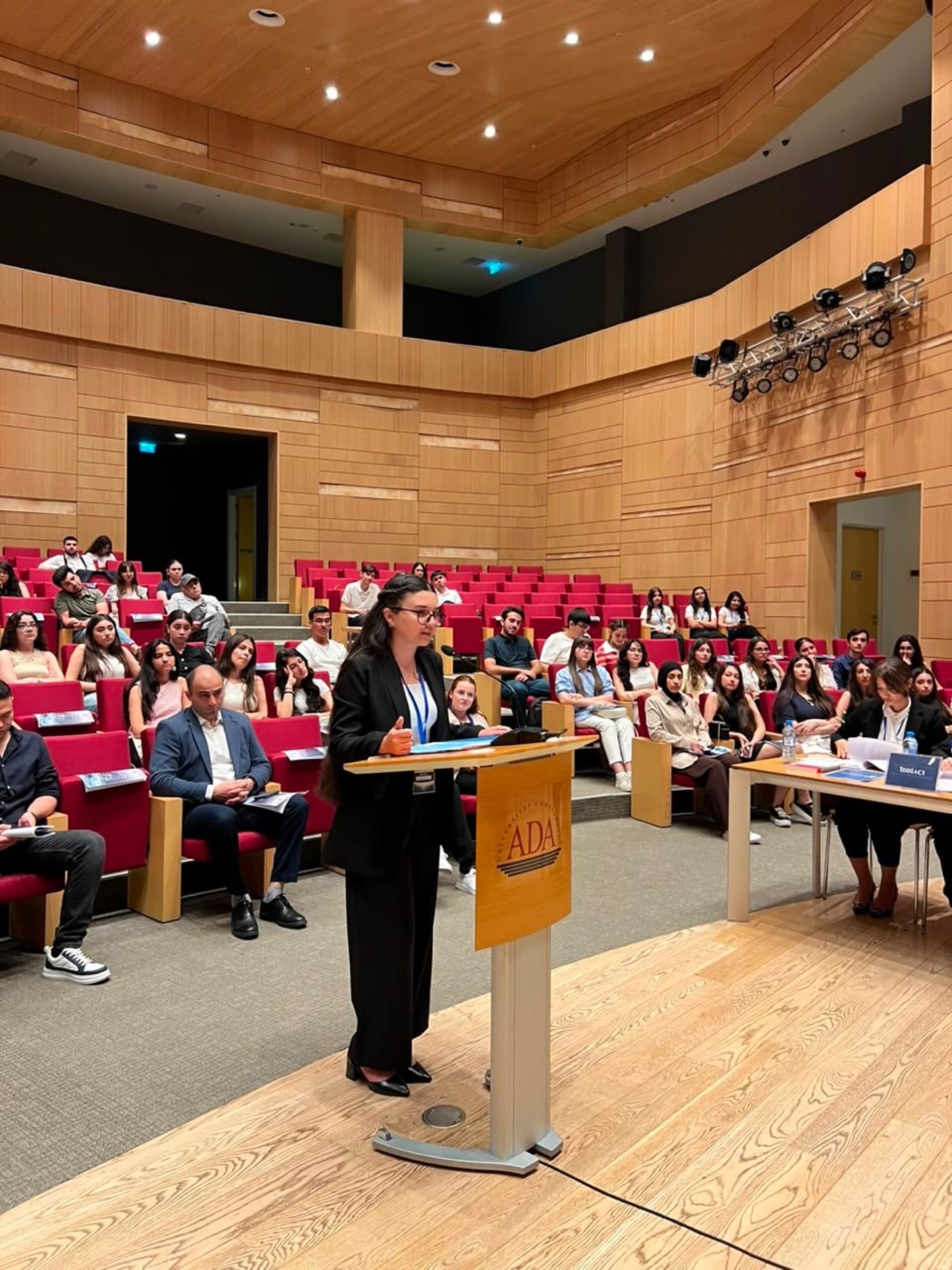
Argued in the C Large Auditorium of ADA University before a bench of five judges, with team 109 for the respondent and team 104 for the applicant. Team 109 won, scoring 87.2 to 83.5.
CILMC Champion Cup
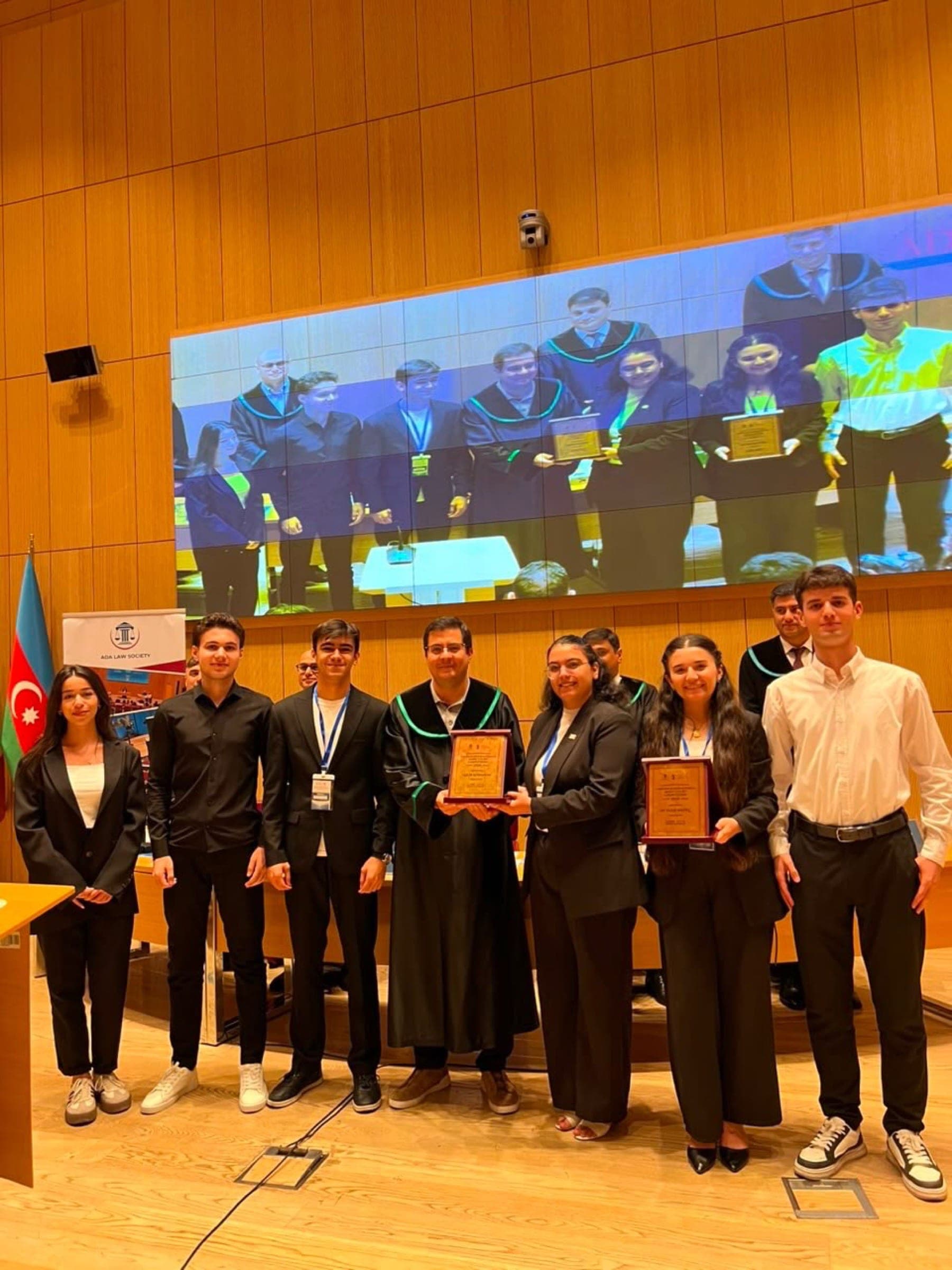
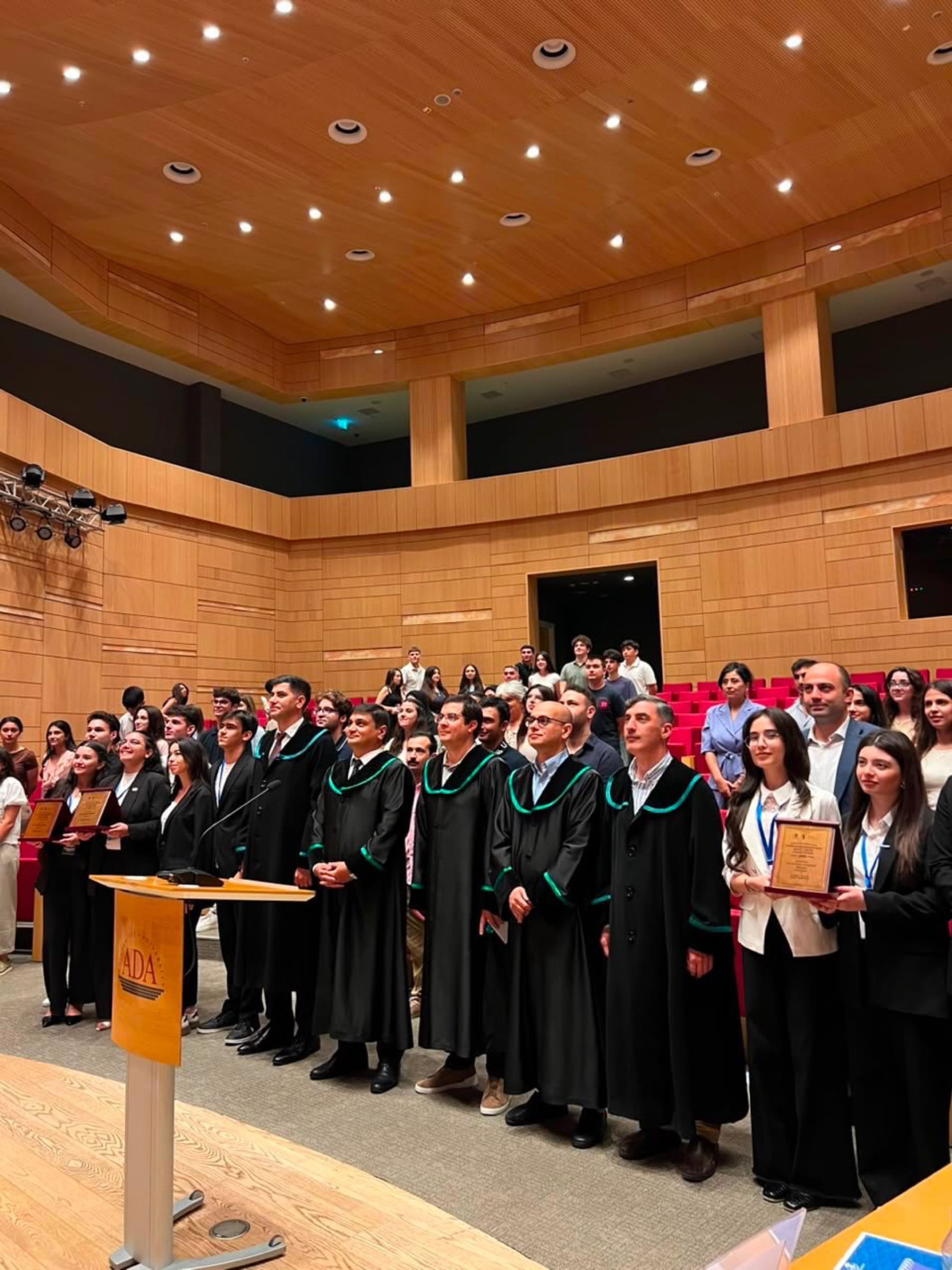
Team 109 of ADA University won the first Caspian International Law Moot Court.
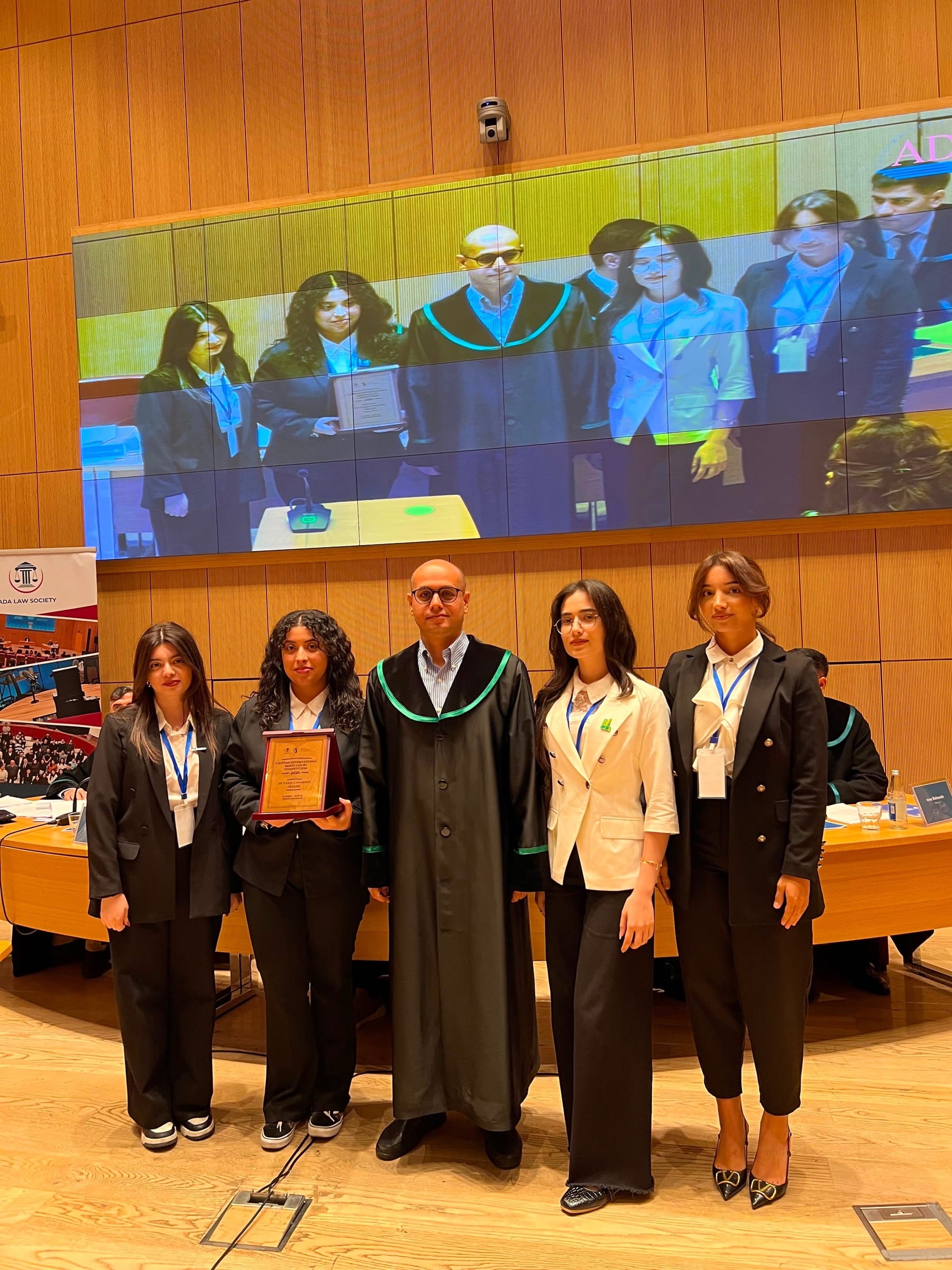
CILMC Champion Cup
Team 109 · ADA University
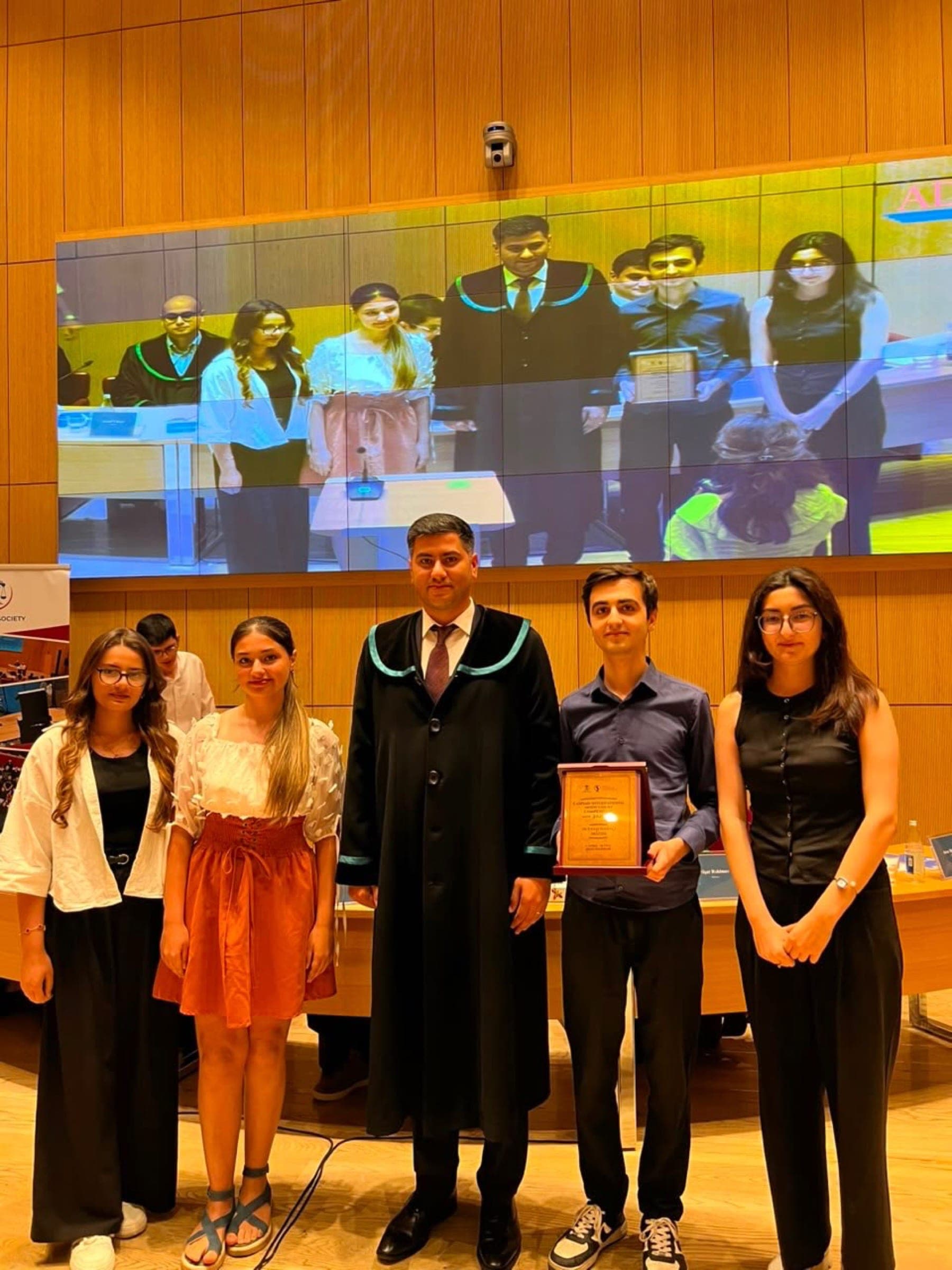
Runner-up Cup
Team 104 · National Aviation Academy
Best Speaker
Nigar Məhərrəmova · ADA University
Best Applicant Memorandum
Team 110 · Baku State University and Karabakh University
Best Respondent Memorandum
Team 104 · National Aviation Academy
The finalists were also offered internships at the State Maritime and Port Agency and at Azerbaijan Caspian Shipping CJSC.
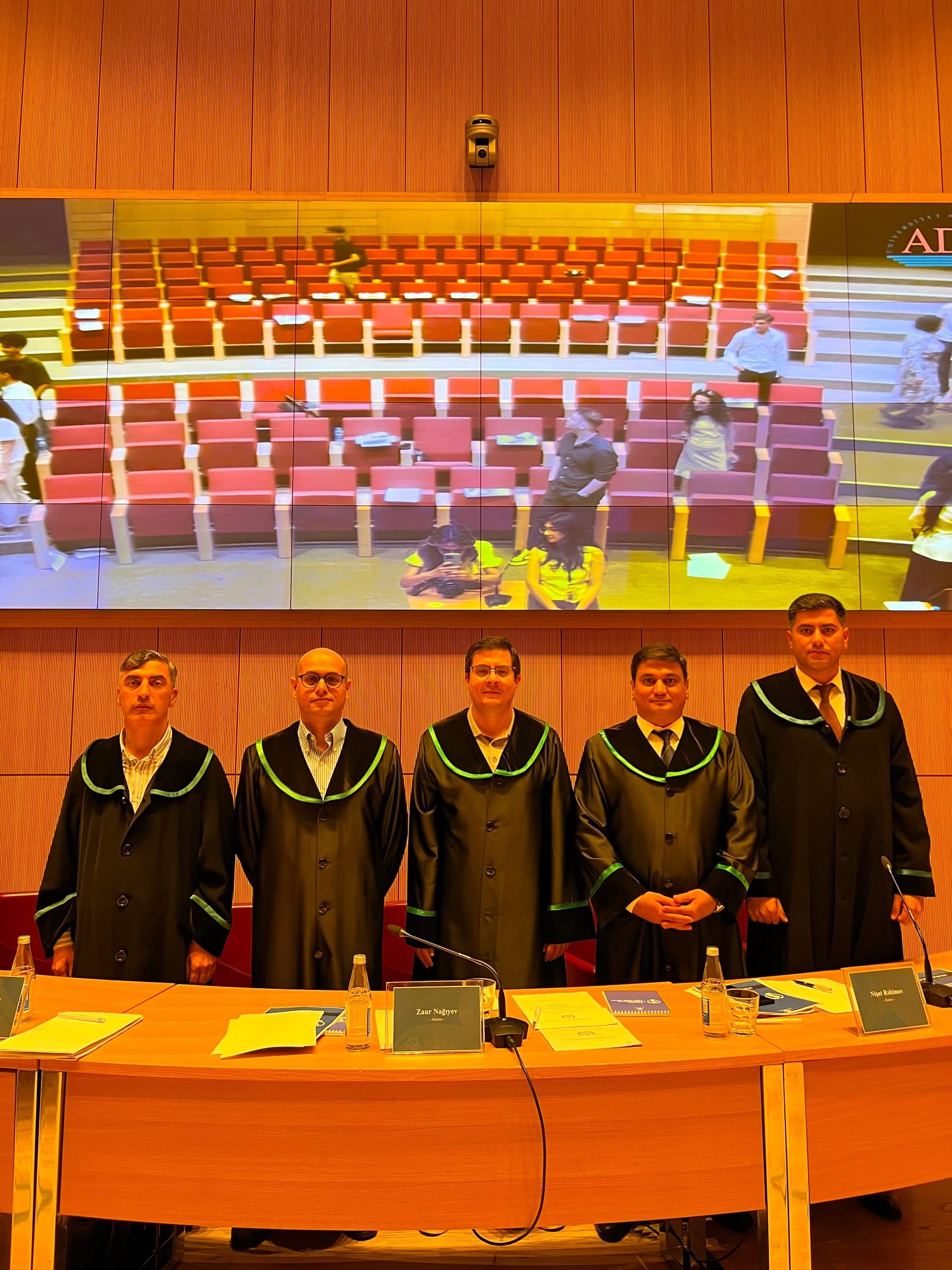
Zaur Nağıyev
Nişat Rəhimov
Vilayət Qədirov
Kamil Vəliyev
Araz Babazadə
Əkbər Əkbərov
İnci Məmmədli
Araz Babazadə
Cavidan Hacızadə
Tağı İbişov
Murad İskəndər
Aysel Səlimova
Nilufər Tağıyeva
Qədir Səfərli
Aydan Mehdiyeva
Salman Hüseynov
Zəkiyyə Hüseynova
Aytac Zeynalova
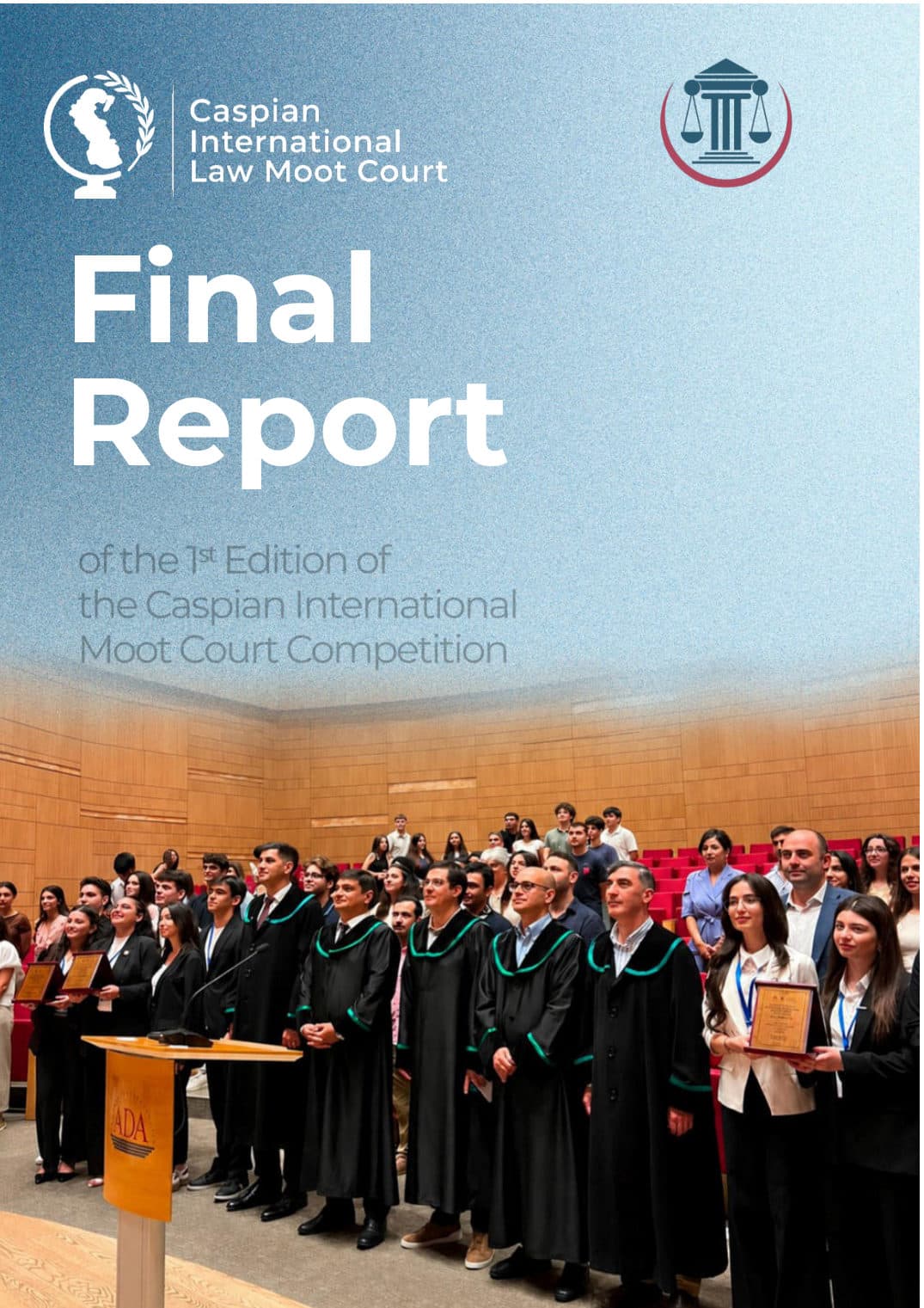
The official report
Caspian International Law Moot Court
The full account of every stage — results tables, judges and the teams’ own reflections.